One missing tooth
A single implant can support a crown without using the neighbouring teeth as supports for a conventional bridge, provided the site is suitable.


Book Online Appointment Anytime

Book Online Appointment Anytime
If you have lost one tooth, several teeth, or are struggling with a loose denture, a dental implant may be one of the options worth discussing. At Vivan Dental in Vaishali Nagar, implant treatment is planned only after checking the gums, available bone, bite, medical history and the area where the tooth is missing.
Implant placement at Vivan Dental starts from ₹20,000. The actual treatment and cost can only be confirmed after a clinical examination and, where required, diagnostic imaging.

A dental implant is placed in the jawbone to provide support for a replacement tooth. After the implant has healed and become stable, it can support a crown, bridge or another implant-supported restoration, depending on how many teeth need to be replaced.
The important part is deciding whether an implant is appropriate for your mouth. Bone quantity, gum health, the position of nearby teeth, bite forces, smoking, certain medical conditions and the final restoration all need to be considered before treatment begins.
An implant is not automatically the right choice for every missing tooth.
A bridge or removable denture may be more appropriate in some situations. The decision should be made after an examination and discussion of the advantages, limitations, treatment time and cost of each option.

Patients usually ask this before anything else. There is no useful yes-or-no answer without examining the mouth, but implants may be discussed in situations such as:
A single implant can support a crown without using the neighbouring teeth as supports for a conventional bridge, provided the site is suitable.
Two or more implants may sometimes support a bridge. The number and position of implants depend on the missing-tooth pattern, bone and planned restoration.
For selected patients, implants can be used to improve the support or retention of a denture or a fixed full-arch restoration.
Low bone volume, active gum disease, smoking, teeth grinding, uncontrolled medical conditions or an infection at the proposed implant site can change the treatment plan. Some patients may need periodontal care, extraction-site healing, bone grafting or other treatment before an implant is considered.
Implant treatment is usually a sequence rather than a single appointment. The exact sequence can change according to the tooth being replaced, bone availability and whether any additional procedure is required.
The dentist checks the missing-tooth area, gums, remaining teeth, bite and relevant medical and dental history.
Dental X-rays and, when clinically required, CBCT imaging may be used to assess available bone and nearby anatomical structures.
The implant is placed in the planned position, usually under local anaesthesia. Additional procedures may be required in some cases.
The implant is given time to heal and integrate with the surrounding bone. Healing time is not identical for every patient.
Once the implant is ready to restore, an abutment and suitable crown, bridge or prosthesis are planned and fitted.

Implant placement is commonly performed under local anaesthesia so the treatment area is numb. If you are anxious about dental treatment, discuss this before the procedure rather than waiting until the day of surgery.
Temporary soreness, swelling, bruising or minor bleeding can occur. The amount varies with the procedure and the individual. Follow the post-operative instructions given for your case.
Contact your treating dentist if pain or swelling becomes severe, keeps worsening, bleeding does not settle, or you notice another unexpected symptom after treatment.
Dental implant surgery has potential complications. Depending on the implant site and procedure, these can include infection, bleeding, delayed healing, failure of the implant to integrate, gum or bone problems, and injury or irritation to nearby anatomical structures. In some lower-jaw cases, nerves may be close to the planned implant site. Your individual risks depend on the clinical situation and should be discussed during treatment planning.
You can also read our guide to dental implant pain and recovery.
Cost is easier to understand when the implant, abutment, crown and any additional procedure are discussed separately. The figures below are the indicative ranges currently provided by Vivan Dental.
| Treatment | Indicative price | What the current estimate includes |
|---|---|---|
| Single tooth implant Implant only |
₹20,000 – ₹35,000 | Titanium implant and placement surgery |
| Implant + zirconia crown | ₹28,000 – ₹50,000 | Implant, abutment and final crown |
| Implant-supported bridge | ₹60,000 – ₹1,20,000 | Example estimate for 2 implants supporting 3–4 teeth |
| Full mouth / All-on-4 Per jaw |
₹1,80,000 – ₹3,50,000 | Indicative range for 4–6 implants with a fixed prosthesis |
| Bone grafting If required |
₹8,000 – ₹20,000 | Per site; additional to implant treatment |
*Prices are indicative, not a treatment quote. Final cost can change with the implant system, bone condition, number and position of implants, grafting requirements, laboratory work and type of final restoration. Ask for a written treatment plan and cost estimate after examination.
An implant is not automatically “better” for every patient. These options solve the same broad problem in different ways, and each has its own clinical requirements.
| Point to compare | Dental implant | Dental bridge | Removable denture |
|---|---|---|---|
| Support | Implant placed in the jawbone | Usually supported by neighbouring teeth | Removable restoration supported by oral tissues and/or remaining teeth |
| Neighbouring teeth | A single implant can often be restored without preparing adjacent teeth | Conventional bridges may require preparation of supporting teeth | Does not usually require crown preparation solely to replace the missing tooth |
| Treatment time | Often includes a healing period | Usually no implant-healing period | Depends on denture type and oral condition |
| Maintenance | Daily cleaning and professional follow-up | Cleaning around and beneath the bridge | Daily removal/cleaning and periodic fit assessment |
| Suitability depends on | Bone, gums, medical history and treatment needs | Condition of supporting teeth and oral health | Oral tissues, remaining teeth and individual needs |

Single-tooth implant: used to replace one missing tooth with an implant-supported crown when the site is suitable.
Implant-supported bridge: may replace several missing teeth without placing one implant for every tooth.
Implant-supported denture: implants may be used to improve denture retention and stability in suitable cases.
Full-arch / All-on-4 type treatment: a complete arch of replacement teeth may be supported by a planned number of implants. This requires detailed assessment and prosthetic planning.
Immediate implant placement: in selected cases an implant may be placed at the time of tooth extraction. It is not appropriate for every extraction site.
The instructions given by your treating dentist should take priority because they are based on the procedure actually performed. In general, early care focuses on protecting the surgical area while it heals.
How long will the implant last?
There is no responsible way to promise a fixed lifespan. Long-term outcomes depend on plaque control, gum and bone health, smoking, general health, bite forces, implant position, restoration design and regular follow-up.

These images show individual treatment cases. They are useful for understanding the type of work carried out, but they should not be used as a prediction of another patient's result.
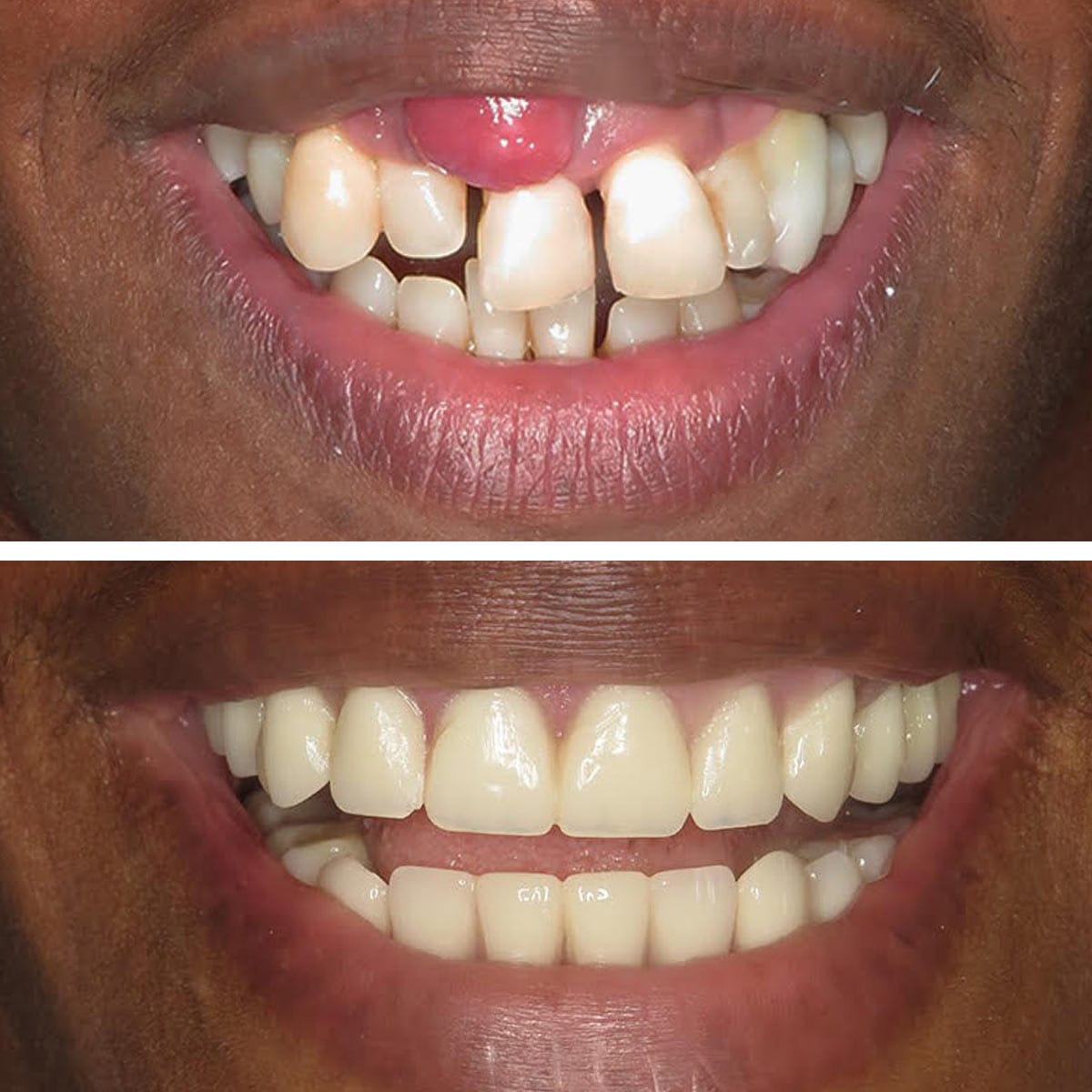
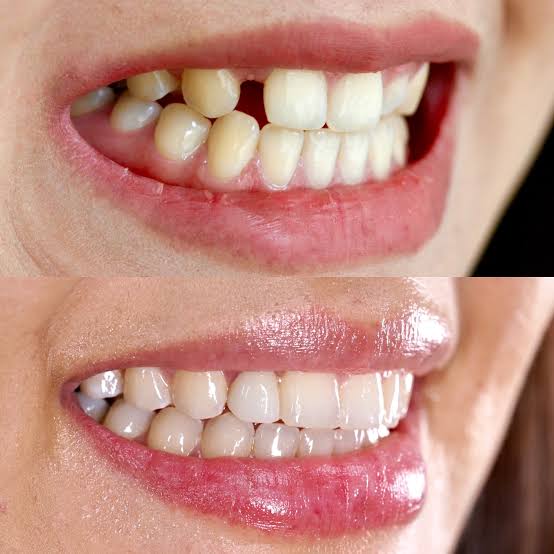
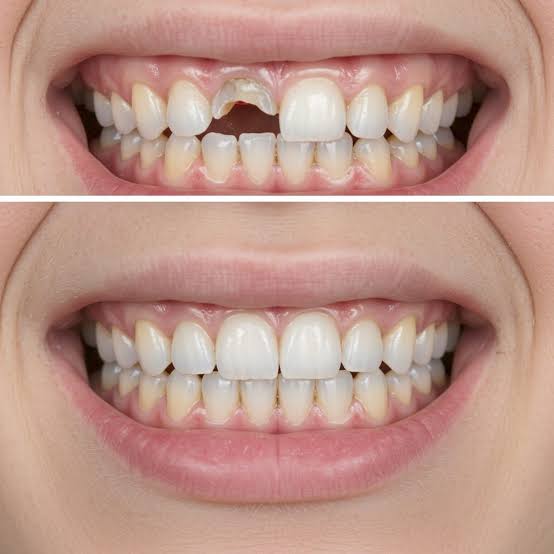
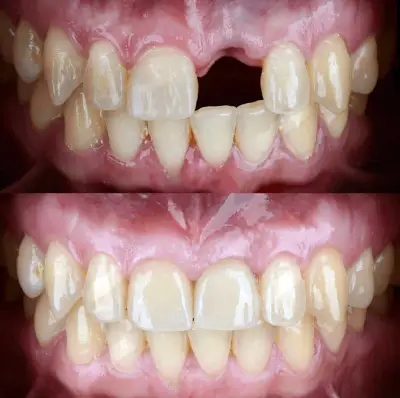
Patient case disclaimer*: Images are stated by Vivan Dental to be from actual patients and should only be published where appropriate patient consent has been obtained and retained. Treatment needs, healing and results vary between individuals. No result is guaranteed.

BDS, MDS – Oral & Maxillofacial Surgery
Dr. Peeyush Sharma provides dental implant procedures at Vivan Dental in Jaipur. He completed his BDS from Mahatma Gandhi Dental College and Hospital, Jaipur, in 2011, followed by MDS in Oral and Maxillofacial Surgery from the same institution.
His clinical work includes dental implant procedures, oral and maxillofacial surgery, management of facial trauma, maxillofacial cysts and tumours, and facial reconstruction.
Rather than choosing on the basis of a claim such as “best implant clinic”, ask whether the clinic can clearly show you how your treatment has been assessed and planned.
The missing-tooth site, gums, remaining teeth, bite and available bone should be assessed before the implant plan is finalised.
Ask what is included in the quoted amount: implant, surgery, abutment, crown, grafting, scans and follow-up may not always be bundled in the same way.
You should understand why an implant is being suggested and what a bridge, denture or no immediate treatment would mean in your particular case.
The expected benefits, limitations, important risks and likely treatment sequence should be discussed before you consent to surgery.
Implant surgery requires appropriate infection-control and instrument-sterilisation procedures.
Implant care does not end when the crown is fitted. Reviews and professional maintenance may be needed over time.
Vivan Dental is located on Queens Road in Vaishali Nagar. Patients visit the clinic from Vaishali Nagar and other parts of Jaipur for dental assessment and treatment.
*Appointment availability can vary. Calling before visiting is recommended.
At Vivan Dental, implant placement starts from ₹20,000. The final amount depends on the implant system, available bone, whether grafting is needed, the number of implants and the final crown or prosthesis. A clinical examination is required before giving a personalised estimate.
Implant placement is usually carried out under local anaesthesia. Temporary soreness, swelling, bruising or tenderness can occur after treatment. The amount and duration vary according to the procedure and individual healing.
There is no single timeline for every patient. Treatment time depends on the implant site, bone condition, healing, number of implants, whether grafting is required and the type of final restoration. Your dentist can give a more useful estimate after examination and imaging.
Sometimes. Immediate placement may be considered when the extraction site, bone, soft tissues and infection status are suitable. In other cases, allowing the area to heal first may be more appropriate.
CBCT is used when three-dimensional information is clinically required for implant planning. The dentist decides which imaging is appropriate after examining the site; it should not be presented as an automatic requirement for every patient.
No option is best for everyone. Implants, bridges and removable dentures have different advantages, limitations, costs and treatment requirements. The condition of your remaining teeth, gums, bone, medical history and preferences should guide the choice.
Dental implants are intended for long-term use, but a fixed lifespan cannot be promised. Oral hygiene, gum and bone health, smoking, general health, bite forces and regular professional care can affect long-term outcomes. The crown or prosthesis may also have different maintenance needs from the implant itself.
BDS, MDS – Oral & Maxillofacial Surgery
Clinical focus on this page: dental implant procedures · Last reviewed: September 2026
External references are provided for general patient education. They do not replace examination, diagnosis or advice from your treating dentist.
Book an examination first. You can then discuss whether an implant, bridge, denture or another approach is appropriate for your situation.
Medical information disclaimer: This page provides general information about dental implants and does not provide an individual diagnosis or guarantee a treatment result. Suitability, risks, treatment sequence, recovery and cost vary between patients. A clinical examination is required before treatment is recommended.